
Financial Literacy Month – The role of plain language in explaining financial concepts

For something that is so vitally important to all of us, money matters can be awfully hard to understand. Talk about stocks, inflation and other financial matters can seem like another language even if it’s all written in English. In order to empower people to take more control over their personal finances, implementing Plain Language in both private and public sector communications is essential.
April is “Financial Literacy Month.” Financial decisions – such as applying for a credit card, choosing a small business loan, or switching banks – cannot be made lightly.
What is readability and why should content editors care about it?
Blog image ReadabilityAll of our organizations are shifting toward digital communication. They’re reducing face-to-face contact, calls and printed material.
Why? An obvious reason is that digital reduces cost. For some government services, the average cost of a digital transaction is 5 percent of the cost of a telephone transaction, 3 percent of the cost of a postal transaction, and 2 percent of the cost of a face-to-face transaction.
Plain Language as an Equity Issue

Why do I provide Plain Language work? As an educator, I value plain language as an equity issue for adults with low reading skills. Here is a snapshot of the problem in the United States
Don’t blame your readers for not understanding
Another holiday season has passed, along with the requisite schmoozing at parties. I tend to be more of a listener than a talker. But if I’m asked, I do admit that I’m an editor and a proponent of plain language.
If most of the people you’re trying to communicate with aren’t responding in the way you intended, there’s a good chance that the problem is YOU.
Why should you care about bad forms?
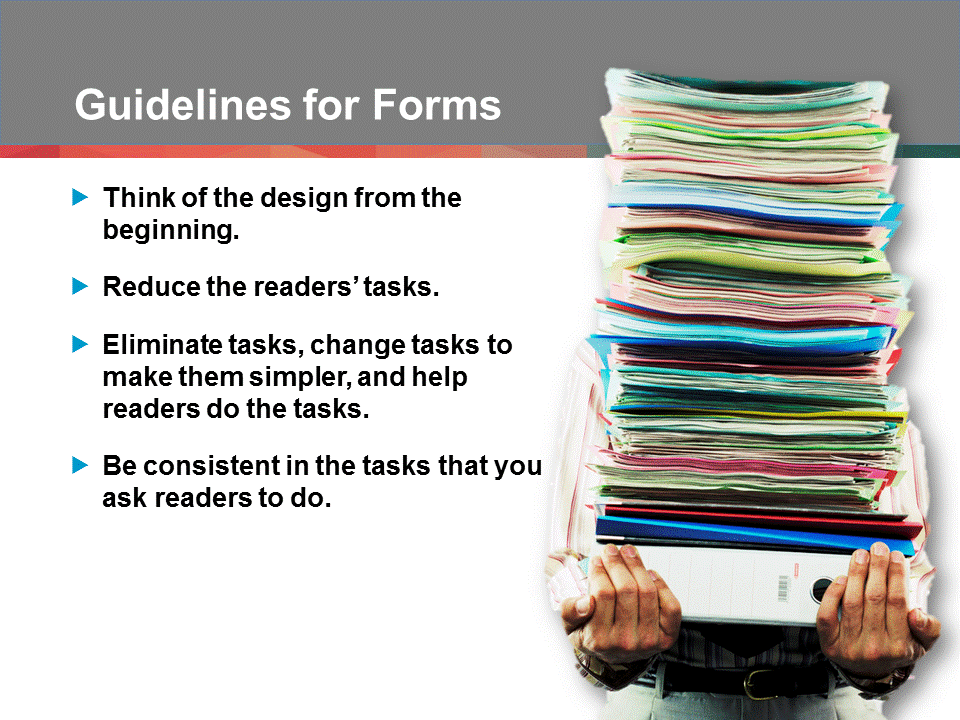
People from all income and education levels are intimidated by poorly designed and ill-conceived forms and notices. In many other projects that we’ve undertaken over the years — from simplifying bankruptcy forms to tax forms, school enrollment forms, credit card statements, insurance applications, and program-related forms — the findings are consistent. The organizations may be different, but the problems remain the same.
Making decisions for your health: Getting the info you need

When your doctor prescribes a medication for your child, do you know what the correct dosage is or how to measure it?
Are you comfortable asking your doctor questions when you receive a lab report and don’t understand the results?
If you can answer “yes” to these questions, you might have high health literacy, says Jodi Duckhorn, a social scientist and Director of Risk Communications at the Food and Drug Administration (FDA).
Because I said so: A video from Baltimore Sun’s editor, John McIntyre
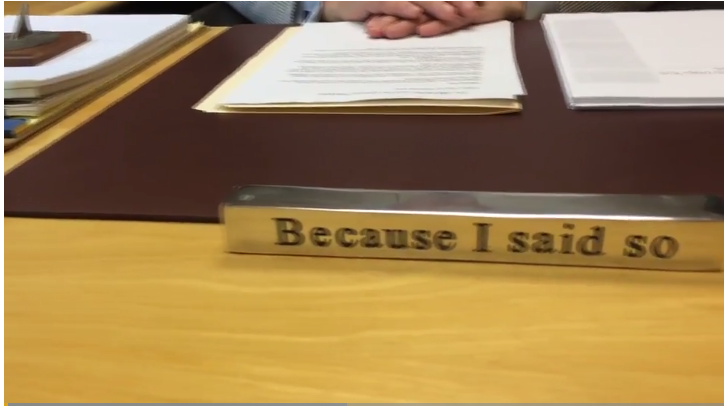
The Chicago Manual of Style does not like the pronoun “s/he,” and they don’t like “he or she” too much, either. They prefer constructions that are gender neutral. But for definitive guidance – and a few giggles – hear what the Baltimore Sun’s editor, John McIntyre, has to say on this topic.
Trimmed gobbledygook

What exactly is gobbledygook? The dictionary definition is “language characterized by circumlocution and jargon, usually hard to understand.”
(Is it just me? Or is it ironic that a dictionary definition of gobbledygook includes an obscure 5-syllable word (circumlocution) that could just as easily have been “wordiness?” Just thinking…)
To sign or not to sign … The “Informed” Consent dilemma

In the late 1990s my doctor suggested I head over to the local academic medical center where a research project was underway to discover the genes associated with my autoimmune condition. That’s when I came face-to-face with my first consent form and the inevitable tradeoff patients make when presented with pages of gobbledygook punctuated by a signature line: either sacrifice understanding in the name of contributing to the greater good, or politely decline.
How and why to use descriptive link language
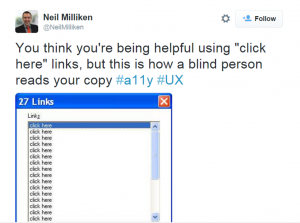
You’d think that people would know better by now than to use “Click here” for links. It’s not like they haven’t been told.
But I still see it on all the sites, all the time–commercial, entertainment, news, and–even considering Section 508–government sites of all kinds, federal, state, and city.
So I’m taking this opportunity to show you why it’s wrong.
Top five health literacy tips for developing health websites
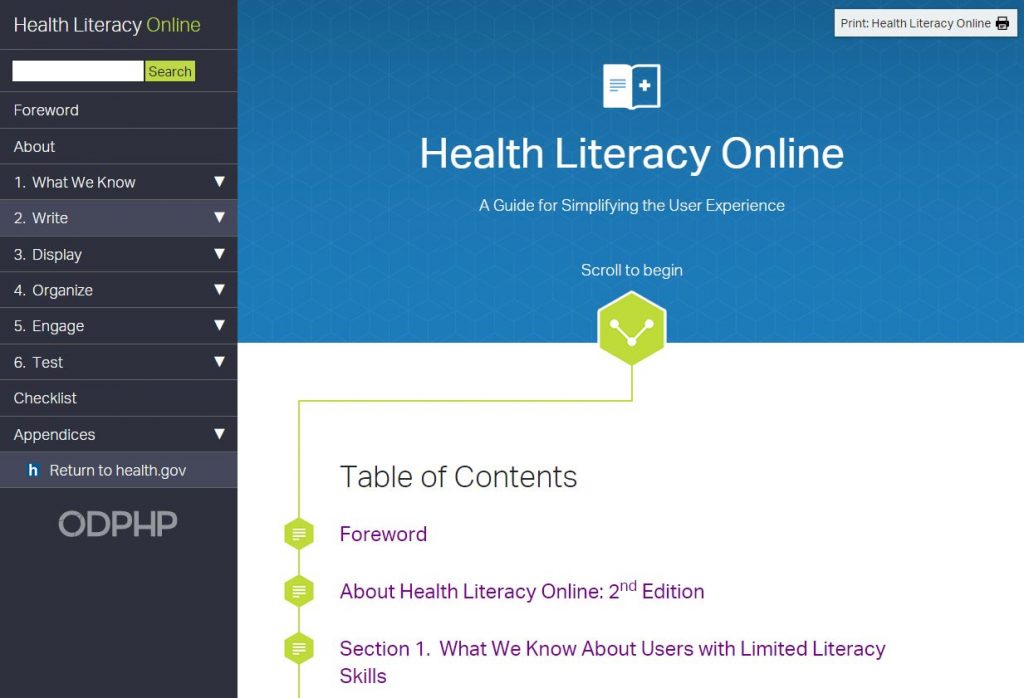
As members of the Office of Disease Prevention and Health Promotion (ODPHP) health literacy team, we are committed to promoting the use of health literacy principles. We recently took a deep dive into the online user experience to write the second edition of Health Literacy Online: A Guide to Simplifying the User Experience, and are honored to have been recognized with a Clear Mark Award for our efforts. We learned a lot about the challenges many people face using health websites. We wanted to share some lessons we learned with those of you who are involved in creating online health content—writers and editors, content managers, digital strategists, user experience strategists, web designers, developers, and other public health communication professionals.
Homepage real estate …or, Battle of the bulletin board

My office has a break room with the usual appointments: tables, chair, refrigerators, vending machines, microwave, Keurig, electric teakettle. And a bulletin board.
I was pleased to see the bulletin board because there’s always so many interesting things there. Some of us bring back menus from local restaurants, some others post current events, others bring in things like the card for the mobile bike repair shop on 18th Street.
Getting doctors to use plain language and other ways to improve patient understanding

Health professionals have the challenging job of translating the jargon they learned in professional school to everyday language that people can understand. The Agency for Healthcare Research and Quality (AHRQ) has help in the form of the AHRQ Health Literacy Universal Precautions Toolkit, Second Edition.
Study finds plain language makes court forms more user-friendly
Jury duty, though sometimes an inconvenient chore, is at the core of the American justice system. Because jury pools draw from all walks of life, they are generally representative of the diverse American public. As such, jury pools are also an excellent testing ground for readability studies.
The Power of “You”: Using the Plain and the Personal to Engage Patients

“Patient engagement” has become a buzzword in health care, and for good reason. For anyone whose job it is to get patients to act—to take their medicines, to come in for their A1c test, to change their diet, to make a decision—finding ways to engage those patients in their health is a must.