
Clear Language, Fair Justice: Simplifying Debt Processes in Minnesota
At the urging of Ian Lewenstein, a Center for Plain Language Board Member, the Center helped support a medical-debt bill in the Minnesota Legislature. The bill—passed in May—addressed the harmful impact of medical debt on people’s lives.
Scribes Establishes the Joseph Kimble Distinguished Service Award

By Legal Writing Prof Scribes – The American Society of Legal Writers – has renamed its Distinguished Service Award as the Joseph Kimble Distinguished Service Award. The honor came as a complete surprise to Professor Kimble, a former Executive Director and longtime Board Member of Scribes. Professor Kimble was in the audience at the Oklahoma […]
Legal writing and the alligator tragedy
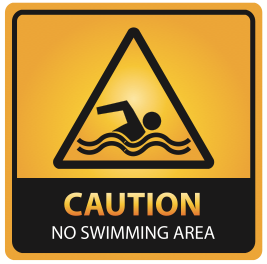
Plain English can be a life or death issue.
I’ve heard and read about the heartbreaking tragedy at the Disney resort in Florida, where a 2 year old was snatched from shallow water by an alligator. Better legal writing – meaning better signage – could have prevented this tragedy, and could prevent others.
Study finds plain language makes court forms more user-friendly
Jury duty, though sometimes an inconvenient chore, is at the core of the American justice system. Because jury pools draw from all walks of life, they are generally representative of the diverse American public. As such, jury pools are also an excellent testing ground for readability studies.
Before and after: Describing a law — without legalese
Joe Kimble is a pleasant oddity. He’s a law professor and author who says the law presents less risk when it is written clearly. We followed his advice to redo this legal notice.
Look what can happen when you ask a few questions. Working with attorneys, we cut through the clutter of a 61-word sentence. The new version is easier for readers to grasp and use the information…
Dealing with the “dumb down” dinosaur, or how to enlighten the ignorant without losing your job.
It continues to shock me that in the year 2014 I still hear people say, “Oh, you want to dumb down my writing” when the subject of plain language comes up.
My reaction is…
Let’s simplify legal jargon!
This TED Talk from February 2010 can still inspire us. Alan Siegel, a branding expert and one of the leading authorities on business communication, calls for the use of plain English to create documents that we can all understand. In this video, he present a clear argument for the need to “make clarity, simplicity and […]
Contracts for the modern age
Most legal contracts seem to be rooted in an ancient language, filled with words like herein, thereto and hereby. But according to a recent article for A List Apart, there’s no reason to write contracts as if we are citizens of ancient Rome. It’s time to update our legal contracts for the 21st century. This […]
How Much is Plain Language Worth?
Joe Kimble, professor of law at Thomas M. Cooley Law School, has just finished his long awaited new book, Writing for Dollars, Writing to Please: The Case for Plain Language in Business, Government, and Law. Carolina Academic Press, which also published his earlier book Lifting the Fog of Legalese, is the publisher. The book sets out the elements of […]
The cost of fine print? About $3K a year.
If you think America is shifting to a culture of transparency, unfortunately, you’re wrong: consumers are drowning in more fine print and byzantine disclosure language than ever before. Bank contracts and product manuals commonly bloat to hundreds of pages, in type as small as 1/6 of an inch. Who reads this stuff? Almost nobody. And as this news clip from […]
The Plain Regulations Act, HR 3786: Making Federal Regulations Accessible
On January 18, Congressman Bruce Braley (D-Iowa) introduced the Plain Regulations Act. Braley also introduced the Plain Writing Act, which became law on October 13, 2010, with strong bipartisan support. The original draft of that Act had covered regulations, but the provision was deleted during the legislative process because of opposition from several sources.