How your brain reacts to ambiguity — and what to do about it

blog image

As humans, we have a tricky relationship with ambiguity.

Used effectively, ambiguity (messages with more than one interpretation) can create clever, insightful, and amusing communication — making it a staple of advertising and comedy.

Used ineffectively, however, ambiguity’s multiple meanings can create confusing and misleading language that prevents readers from understanding what you mean.

Give us your feedback?
feedback blog image

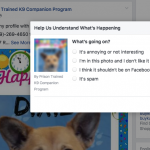
We’ve all felt the frustration of filling out an online comment card that looks like it was created by someone who had never seen the website you want to comment on in the first place. “Have a Comment?” the site asks enthusiastically. You click on the digital Comment Card link. The page opens, and you scan for the options that most closely match your feedback. It’s not there.

Positive language makes our brains happier

Positive Language

As plain language experts, we often tell clients to use positive language. Even when explaining a negative situation, we recommend using as few negative words as possible. Many of us use this guidelines based on marketing strategies. However, we now have science to back us up.

Briefly fun, then quickly annoying business phrases
A lot on my plate image

The first time I heard a guy in a suit say, “We need to open the kimono” I screamed like a genteel Victorian and averted my eyes. I hadn’t heard this bit of business jargon before and was expecting the worst. Apparently, this colorful phrase simply means to “reveal information.” Phew. No kimonos were literally opened. (Look. It’s fun to use “literally” accurately.)

I happen to love interesting and unusual phrases.

An Rx for plain language

Rx Blog

What if the universal precautions approach to health literacy really were universal?

Modeled after medicine’s universal precautions approach to infection control that treats all bodily fluids as they were infectious, this health literacy strategy is well accepted as one that improves communication: Assume it’s hard for all patients to understand health information and to use the health care system.

Empathy: The Forgotten Element in Successful Plain Language Communication

Empathy blog

“People who lean on logic and philosophy and rational exposition end by starving the best part of the mind.” This quote by William Butler Yeats, one of Ireland’s most famous writers, illustrates a problem we have in the plain language community. We create a multitude of written material, but we rely primarily on logical structures, […]

Is Government writing growing more plain?

Report Card 2015

The grades say it is…mostly.

As we do every year, the Center reviewed agencies’ plain language programs and some writing samples for the annual Federal Report Card, released today, November 17. Representative Dave Loebsack announced the results.

Optimizing your web content for plain language

When you search for something on the web, do you search for clinical terms and technology? Or do you think about a problem you need solved?

If you’re like most people, you think about your problems in plain language.

You’re more likely to search for “Do I have poison ivy?” than “Have I suffered exposure to toxicodendron radicans?”

That’s why it’s important to keep natural, everyday questions in mind when you’re creating content for the web.

Questions from Plain Language students

In 2012, with the support of a Legal Services Corporation grant, LawNY (Legal Aid of Western New York) and Transcend (a language services company) offered a 10-week interactive online course, Plain Language Seminar for Lawyers. 

Twenty lawyers from court systems and legal aid agencies across the nation signed up to learn more about plain language and to receive individual guidance with their active drafting projects.

Here are some of the questions posed during this class.

Teaching Plain Language: 5 Challenges

One of my professional roles is to teach legal writing. And in spite of what you might think, most of us who teach legal writing try to teach law students to use plain language (to some degree or another). But term after term, I’m dismayed at the final assignments’ lack of plain language. So what’s standing in the way? I’ve identified 5 obstacles here, although I’m sure there are others. Whether you’re a plain-language coach, some other kind of teacher, or someone who’s just trying to get people to climb on the plain-language train, maybe some of the suggestions here will help. Although some of them focus on legal writing, I’m sure you can draw analogies to your own field.

The source of bad writing

The source of bad writing

Author – Steven Pinker
[Reprinted from the Wall Street Journal with the author’s permission]

Why is so much writing so bad? Why is it so hard to understand a government form, or an academic article or the instructions for setting up a wireless home network?

The most popular explanation is that opaque prose is a deliberate choice. Bureaucrats insist on gibberish to cover their anatomy.