
Plain Language has a clear place in academic writing
For two years, I worked as a college writing center tutor while enrolled in a graduate professional writing program. Over those two years, I studied, practiced, and helped others with clear writing. While the papers I read every day in the writing center ranged from argumentative essays, persuasive essays, and research papers, to more creative, narrative essays, they all had one thing in common: they were written for a target audiience—a professor. And from assignment conception to finished product, plain language played a significant role.
Plain Language Pros: Fight the “Cobbler’s Kids” Syndrome

The plain language world is filled with passionate people who believe strongly in the power and importance of clarity. We spend our days fighting jargon and legalese like the true foes they are. We help our clients share clear, empathetic messages that reflect their audience’s true needs.
But, for many of us, looking more closely at our own communications may uncover an unfortunate secret: The cobbler’s children have no shoes.
Financial Product Legalese – It’s on you
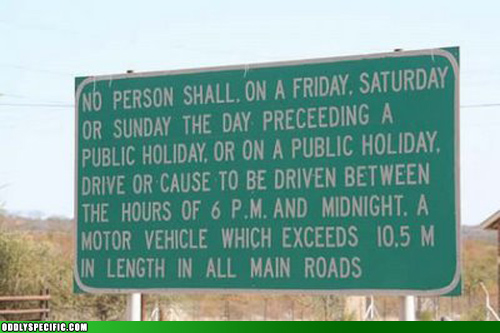
The Center for Plain Language had this to say about the legal fine print that overran one advertisement for an investment product: “Once again a financial institution that expects me to trust them with my money makes it impossible for me to know what they are going to do with my money.”
The Center had singled out a Charles Schwab & Co. ad for a Wondermark “award” for unintelligible writing.
Clear Content: Every written word represents your university brand

I expect 99.9% of the public wouldn’t understand this information on a university website explaining (I think) that the owner of content on a website is responsible for that content. I bet you thought “assets” meant “money,” but this information comes from the IT unit. “Assets” means web content. To be fair, the intended audience likely is IT people, so perhaps the language is appropriate for them. Perhaps.
Smarten up – Don’t be a dummy
A quote (as pointed out by an alert twitter user) variously attributed to Blaise Pascal, John Locke, Benjamin Franklin, Henry David Thoreau, Cicero, Woodrow Wilson, Winston Churchill, and Mark Twain states, “I didn’t have time to write a short letter, so I wrote a long one instead.” Coming across this comment again recently reminded me of the familiar complaint that plain language somehow equals “Dumbing Down.”
Who you gonna call – Wordbusters!
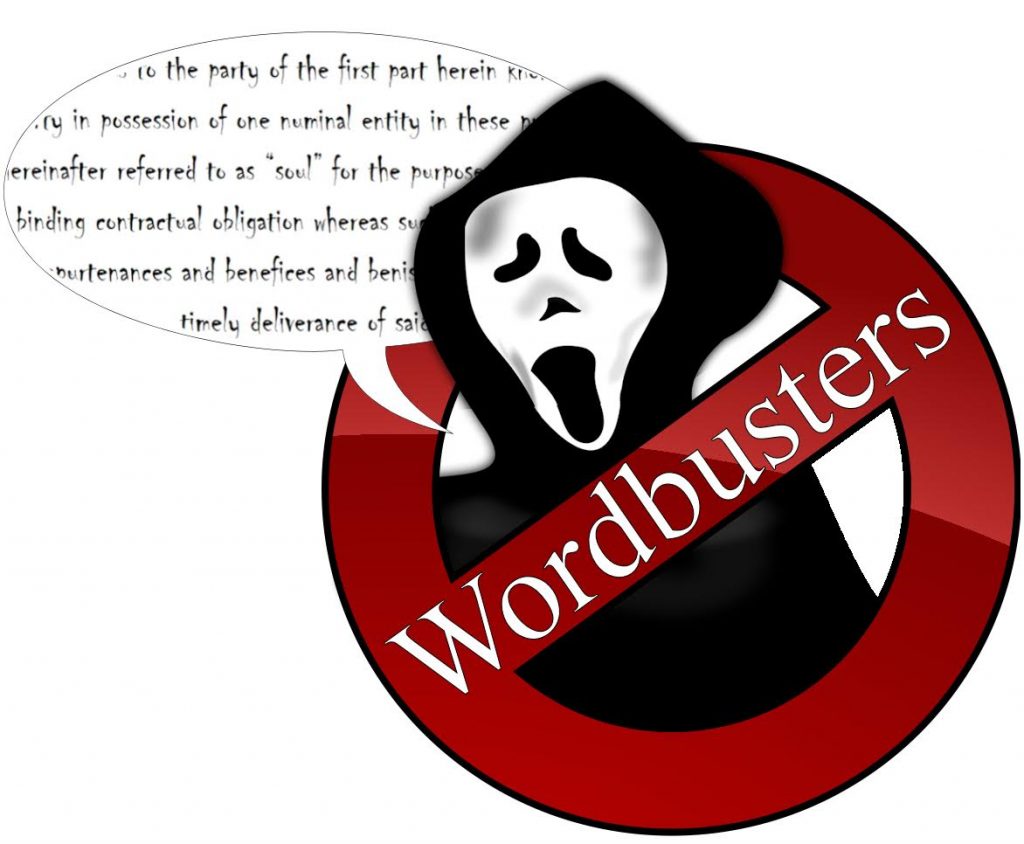
After you’ve taken your costumed little ones out to trick or treat the neighborhood and have put them down to bed, you may want to settle down and relax with a book or surf the web for a while. But the terrors of Halloween are only just beginning – beware the many horrors lurking among those pages!
Privacy notices: Some takeaways from the TIME.com article

Early this summer, TIME.com asked the Center for Plain Language to evaluate some online privacy notices, using the types of assessment we use for our ClearMark awards and our Federal Plain Language Report Card. I took the lead on the project and learned some great lessons along the way. TIME.com published the article in August.
Serif or Sans?
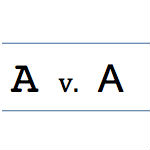
Plain language writers are mindful about displaying text in highly readable fonts. Some writers choose fonts based on aesthetic considerations; others follow common text display conventions.
Rules? Or just suggestions?
Ah. Those pesky rules. If everyone would simply follow them, all would be well.
It’s not that easy, is it? But why not? Because context matters. For example, plenty of people reading this are thinking, “What kind of expert are you? You’re not even writing proper sentences! ‘Ah.’ isn’t a sentence! ‘Those pesky rules.’ isn’t a sentence! How can you hold yourself out as an expert if you don’t even follow the most basic rules of writing?”
But others will agree that ignoring the basic rules was perfectly justified in that first paragraph. Ignoring the rules shapes the style—it adds a certain tone or even personality. And if we can’t play with tone, style, and personality in a blog, where can we?
An instant way to shorten your sentences
Do your sentences suffer from “wordy phrase-itis”? These phrases pad your sentences with extra words. They increase the reading grade level. And they can make your writing sound stuffy. Here’s a list you can use to guide you.
Love and plain language
I love my wife. I tell her so several times a day. When we wake up, on the phone, when we get home from work, before we drift off to sleep. The day just doesn’t feel complete without it.
On Valentine’s Day, however, we won’t do anything special. No office deliveries of long-stemmed red roses. No Hallmark greeting card with ready-made sentiments to express what I am (apparently) incapable of expressing on my own. And no making reservations at a hoity-toity restaurant weeks in advance to dine on an overpriced prix fixe menu.
The man in the middle: How to make it all the way up the chain
Getting an organization to start using plain language shouldn’t be all that hard, should it?
Simply get the folks at the top to buy-in, train all the writers, and after a bit of learning curve, all new and revised documents should start to be clear and concise.
Right?
Well, maybe not.
Seems one critical piece is missing in that rosy scenario – the reviewers.
On the event of Annetta’s “retirement”
In honor of the retirement of Annetta L. Cheek, PhD, Board Chair and co-founder of the Center for Plain Language, an American flag will fly over the U.S. Capitol today. The Center is a nonprofit organization that advocates for clear language in government, business, nonprofits and universities. The testimonial reads: “As she steps down from her […]
Analysis: The high cost of gobbledygook
In an op ed originally published in Government Executive, Congressman Bruce Braley, the author of the Plain Writing Act of 2010, writes about the problems and costs of confusing government language, and about the role of the Center’s report card in addressing the issue.
Plain Language Report Card
Reposted from www.healthwise.org Karen Baker, MHS, Senior Vice President, 11/25/2013 Plain language has been making headlines—in the world beyond health care! Last week was report card time for federal agencies. The Center for Plain Language, a nonprofit volunteer organization based in Washington, D.C., graded 20 agencies and departments for compliance with the Plain Writing Act. President […]